Buy 掏.com ?
We are moving the project
掏.com .
Are you interested in purchasing the domain
掏.com ?
domain@kv-gmbh.de · 0541-91531010
Buy 掏.com ?
Why do solids not bond together?
Solids do not bond together because the particles in a solid are already closely packed and have strong intermolecular forces holding them together. This makes it difficult for solids to bond with other solids because there is limited space for new particles to fit in between the existing particles. Additionally, the strong intermolecular forces make it energetically unfavorable for solids to break apart and form new bonds with other solids. **
How many Archimedean solids are there?
There are a total of 13 Archimedean solids. **

Similar search terms for Solids
Top-Angebote
Products related to Solids:
-
Lennies Toys Catan Junior Board Game 6-9 yrs - Strategy and Commerce for KidsIntroduce your little ones to the world of strategy and commerce with Catan Junior - Board Game. This game is designed for children aged 6-9 and offers a simplified version of the classic game of Catan. Key features include age-appropriate gameplay, engaging components, and social interaction. The game promotes teamwork and communication as children negotiate trades and collaborate with friends and family. It's a great way to bond and create memories during family game nights.29,99 £*Shipping: 3,95 £Secure redirect to the provider
-
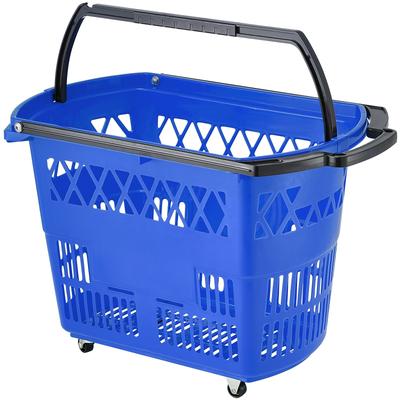
Tools, Home & Hobby 39L Rolling Shopping Basket Set With Wheels And Handles For Grocery Stores And Retail Shops 39L Rolling Shopping Basket Set With Wheels And Handles For Grocery Stores And Retail ShopsMake every shopping trip easier with a spacious rolling shopping basket designed to move heavy purchases with less effort. This 6piece shopping basket with wheels set offers 39L capacity per basket for groceries, retail goods, books, toiletries, and...199,97 $*Shipping: 0,00 $Secure redirect to the provider
-
York Wallcoverings Exchange Crystal Shore WallpaperExchange's small, unique, fractured lines feel like an artisanal installation rendered in burnished metallic against a textural plaster ground, shown in taupe grey with burnished metallic..170,00 $*Shipping: 0,00 $Secure redirect to the provider




-
Do transverse waves only occur in solids?
No, transverse waves can occur in solids, liquids, and gases. Transverse waves are characterized by the particles of the medium moving perpendicular to the direction of the wave. This type of wave motion can be observed in various mediums, not just solids. Examples of transverse waves in different mediums include water waves (liquid), seismic S-waves (solid), and electromagnetic waves (can travel through vacuum). **
-
Why are there only five platonic solids?
There are only five platonic solids because they are the only convex polyhedra where each face is a regular polygon, and the same number of faces meet at each vertex. These strict criteria limit the possible combinations of faces, edges, and vertices that can form a platonic solid. The five platonic solids are the tetrahedron, cube, octahedron, dodecahedron, and icosahedron, each with a unique combination of faces, edges, and vertices that meet the criteria for being a platonic solid. **
-
What is the volume of rotational solids?
The volume of rotational solids is the amount of space enclosed by a three-dimensional shape formed by rotating a two-dimensional shape around an axis. This can be calculated using the method of cylindrical shells or the method of disks and washers, depending on the shape being rotated. The volume of a rotational solid can be found by integrating the cross-sectional area of the shape as it is rotated around the axis. This concept is commonly used in calculus to find the volume of objects such as spheres, cones, and cylinders. **
-
Which components are part of the milk solids?
The milk solids consist of proteins, fats, lactose (milk sugar), and minerals. **


"Do you gain weight from liquids or solids?"
Weight gain can occur from consuming both liquids and solids. When you consume more calories from either source than your body needs for energy, the excess calories are stored as fat, leading to weight gain. It's important to be mindful of portion sizes and the caloric content of both liquids and solids in order to maintain a healthy weight. Additionally, some liquids, such as sugary drinks, can contribute to weight gain more quickly due to their high calorie and sugar content. **
What is the thermal volume change of solids?
The thermal volume change of solids refers to the change in volume that occurs when a solid material is subjected to a change in temperature. When a solid material is heated, its particles vibrate more vigorously, causing the material to expand and increase in volume. Conversely, when a solid material is cooled, its particles vibrate less vigorously, causing the material to contract and decrease in volume. This thermal volume change is quantified by the coefficient of thermal expansion, which measures the fractional change in volume per degree change in temperature. **
Top-Angebote
Products related to Solids:
-
Tools, Home & Hobby Heavy Duty Metal Shopping Baskets With Handles For Retail Stores And Grocery Shopping Heavy Duty Metal Shopping Baskets With Handles For Retail Stores And Grocery ShoppingMake every shopping trip easier with durable metal shopping baskets built to carry more with confidence. Designed for supermarkets, convenience stores, bookstores, and other retail spaces, this 12piece set provides customers with a practical way to...194,97 $*Shipping: 0,00 $Secure redirect to the provider
-
Lennies Toys Catan Junior Board Game 6-9 yrs - Strategy and Commerce for KidsIntroduce your little ones to the world of strategy and commerce with Catan Junior - Board Game. This game is designed for children aged 6-9 and offers a simplified version of the classic game of Catan. Key features include age-appropriate gameplay, engaging components, and social interaction. The game promotes teamwork and communication as children negotiate trades and collaborate with friends and family. It's a great way to bond and create memories during family game nights.29,99 £*Shipping: 3,95 £Secure redirect to the provider
-
Tools, Home & Hobby 39L Rolling Shopping Basket Set With Wheels And Handles For Grocery Stores And Retail Shops 39L Rolling Shopping Basket Set With Wheels And Handles For Grocery Stores And Retail ShopsMake every shopping trip easier with a spacious rolling shopping basket designed to move heavy purchases with less effort. This 6piece shopping basket with wheels set offers 39L capacity per basket for groceries, retail goods, books, toiletries, and...199,97 $*Shipping: 0,00 $Secure redirect to the provider
-
Why do solids not bond together?
Solids do not bond together because the particles in a solid are already closely packed and have strong intermolecular forces holding them together. This makes it difficult for solids to bond with other solids because there is limited space for new particles to fit in between the existing particles. Additionally, the strong intermolecular forces make it energetically unfavorable for solids to break apart and form new bonds with other solids. **
-
How many Archimedean solids are there?
There are a total of 13 Archimedean solids. **
-
Do transverse waves only occur in solids?
No, transverse waves can occur in solids, liquids, and gases. Transverse waves are characterized by the particles of the medium moving perpendicular to the direction of the wave. This type of wave motion can be observed in various mediums, not just solids. Examples of transverse waves in different mediums include water waves (liquid), seismic S-waves (solid), and electromagnetic waves (can travel through vacuum). **
-
Why are there only five platonic solids?
There are only five platonic solids because they are the only convex polyhedra where each face is a regular polygon, and the same number of faces meet at each vertex. These strict criteria limit the possible combinations of faces, edges, and vertices that can form a platonic solid. The five platonic solids are the tetrahedron, cube, octahedron, dodecahedron, and icosahedron, each with a unique combination of faces, edges, and vertices that meet the criteria for being a platonic solid. **
Similar search terms for Solids
-
York Wallcoverings Exchange Crystal Shore WallpaperExchange's small, unique, fractured lines feel like an artisanal installation rendered in burnished metallic against a textural plaster ground, shown in taupe grey with burnished metallic..170,00 $*Shipping: 0,00 $Secure redirect to the provider
-
York Wallcoverings Exchange Misty Haze WallpaperExchange's small, unique, fractured lines feel like an artisanal installation rendered in burnished metallic against a textural plaster ground, shown in sea glass green with burnished metallic..170,00 $*Shipping: 0,00 $Secure redirect to the provider
-
What is the volume of rotational solids?
The volume of rotational solids is the amount of space enclosed by a three-dimensional shape formed by rotating a two-dimensional shape around an axis. This can be calculated using the method of cylindrical shells or the method of disks and washers, depending on the shape being rotated. The volume of a rotational solid can be found by integrating the cross-sectional area of the shape as it is rotated around the axis. This concept is commonly used in calculus to find the volume of objects such as spheres, cones, and cylinders. **
-
Which components are part of the milk solids?
The milk solids consist of proteins, fats, lactose (milk sugar), and minerals. **
-
"Do you gain weight from liquids or solids?"
Weight gain can occur from consuming both liquids and solids. When you consume more calories from either source than your body needs for energy, the excess calories are stored as fat, leading to weight gain. It's important to be mindful of portion sizes and the caloric content of both liquids and solids in order to maintain a healthy weight. Additionally, some liquids, such as sugary drinks, can contribute to weight gain more quickly due to their high calorie and sugar content. **
-
What is the thermal volume change of solids?
The thermal volume change of solids refers to the change in volume that occurs when a solid material is subjected to a change in temperature. When a solid material is heated, its particles vibrate more vigorously, causing the material to expand and increase in volume. Conversely, when a solid material is cooled, its particles vibrate less vigorously, causing the material to contract and decrease in volume. This thermal volume change is quantified by the coefficient of thermal expansion, which measures the fractional change in volume per degree change in temperature. **
* All prices are inclusive of VAT and, if applicable, plus shipping costs. The offer information is based on the details provided by the respective shop and is updated through automated processes. Real-time updates do not occur, so deviations can occur in individual cases. ** Note: Parts of this content were created by AI.